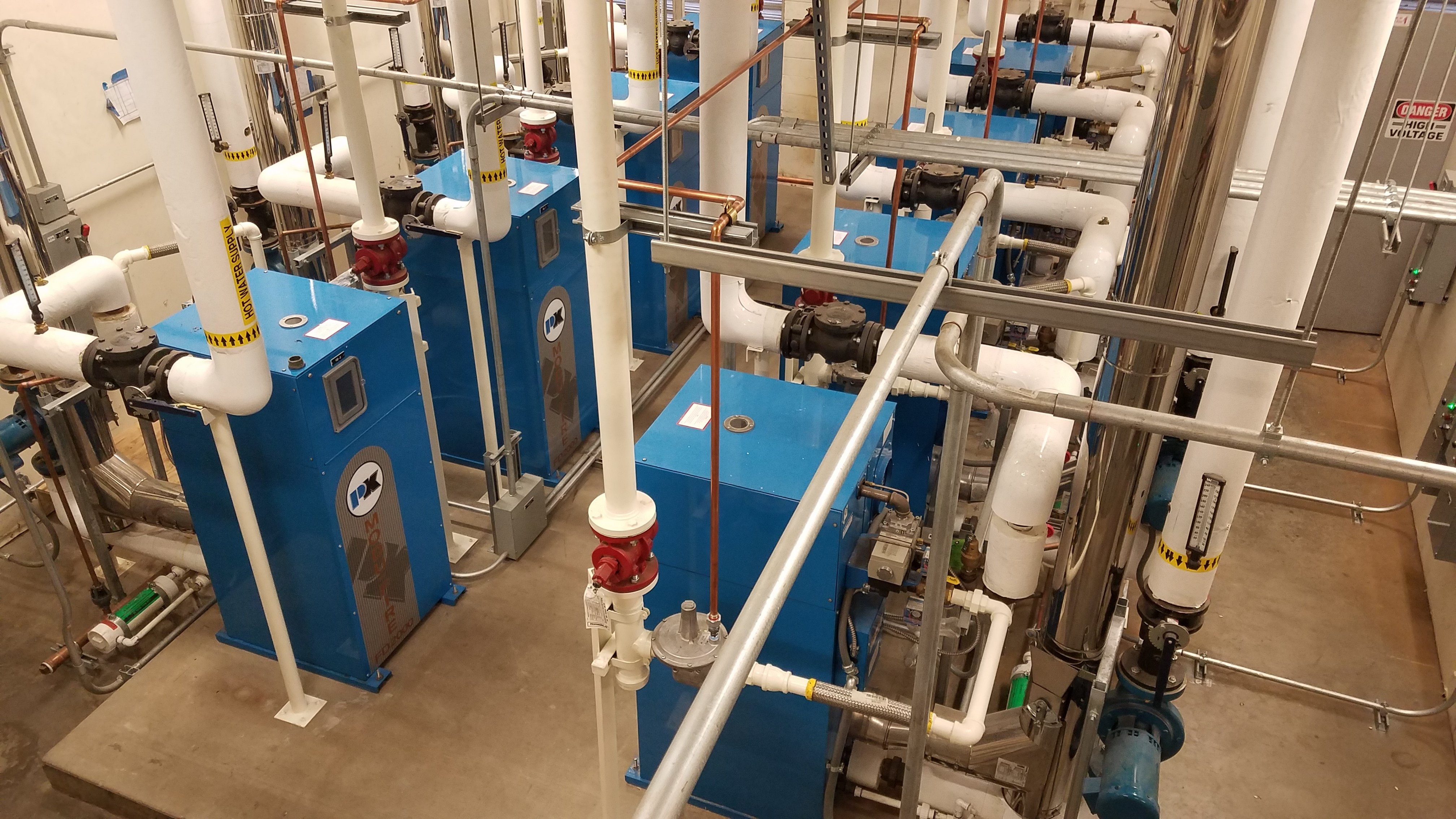
High-efficiency condensing boilers have become a standard in today’s commercial heating landscape, offering significant energy savings and reduced emissions. But with increased efficiency comes an important byproduct that must be properly managed: condensate.
While often overlooked, condensate management plays a critical role in maintaining system performance, protecting equipment, and ensuring compliance with local codes. Understanding how to properly handle condensate is key to getting the most out of a high-efficiency boiler system-especially when working with advanced systems like Patterson-Kelley’s condensing boiler lineup.
What Is Condensate—and Why Does It Matter?
Condensing boilers, such as the P-K STORM® and MACH® series, achieve higher efficiency by extracting additional heat from flue gases. As these gases cool, water vapor condenses into liquid-known as condensate.
This condensate is:
- Acidic in nature (typically pH 3-5)
- Produced continuously during operation
- Potentially harmful to piping and drainage systems if not properly treated
Because high-efficiency boilers are designed to maximize heat extraction, they also generate more condensate-making proper management essential for long-term performance.
To better understand the volume involved, a general rule of thumb is that condensing boilers can produce approximately 1 gallon of condensate per hour for every 100,000 BTUs of input. That means a 1,000,000 BTU system can generate up to 10 gallons of condensate per hour under certain operating conditions. As system capacity increases, so does the potential condensate flow-making proper drainage and neutralization system design even more critical.
Key Components of a Condensate Management System
A properly designed condensate system includes several critical elements:
1. Condensate Drain Lines
Condensate must be safely routed from the boiler to an approved drainage location. Patterson-Kelley systems are designed to integrate seamlessly with corrosion-resistant piping materials such as PVC, CPVC, or polypropylene, ensuring long-term durability.
2. Neutralization Systems
Because condensate is acidic, most installations require a neutralizer before discharge. These systems raise the pH to acceptable levels, helping facilities meet environmental and plumbing code requirements.
Routine inspection of neutralizing media is essential to maintain effectiveness-especially in high-efficiency systems that produce condensate continuously.
3. Condensate Traps
Properly installed traps prevent flue gases from escaping while allowing condensate to drain efficiently. When paired with advanced boiler controls like NURO®, system monitoring can help identify irregularities that may indicate drainage or trap issues.
4. Intelligent Controls and Monitoring
Modern boiler systems rely on smart controls to maintain optimal operation. Patterson-Kelley’s NURO® control system helps monitor system performance and can assist in identifying operational issues that may be linked to condensate flow or drainage problems.
Common Challenges in Condensate Management
Even with high-quality equipment, improper condensate handling can lead to performance issues.
- Corrosion of Piping and Infrastructure
Without proper neutralization and material selection, acidic condensate can degrade piping and drainage systems over time.
- Clogged Lines or Neutralizers
Condensate systems can accumulate debris or depleted neutralizing media, leading to restricted flow and potential system shutdowns.
- Freezing Conditions
In colder climates, improperly routed condensate lines may freeze, causing blockages and operational interruptions.
- Overlooked Maintenance
Condensate systems often operate out of sight, making routine inspection and maintenance critical to avoid unexpected failures.
Best Practices for Reliable Condensate Management
To support long-term efficiency and reliability:
- Use corrosion-resistant piping materials
- Install and maintain neutralization systems
- Regularly inspect condensate traps and lines
- Ensure proper slope and drainage design
- Protect piping from freezing conditions
- Leverage advanced controls like NURO® for system monitoring
- Schedule routine maintenance, especially before peak heating seasons
Supporting High-Efficiency Performance
Condensate management is an essential part of operating high-efficiency systems like the P-K STORM® and MACH® boilers. These systems are engineered to deliver maximum performance-but like any high-efficiency solution, they rely on proper system design and maintenance to operate at their full potential.
Final Thoughts
A well-designed condensate management system protects your investment, supports energy efficiency, and ensures compliance with industry standards. By combining proper materials, thoughtful system design, and advanced controls, facilities can maintain reliable performance year-round.
Looking to optimize your high-efficiency boiler system?
Contact your local Patterson-Kelley representative to learn how our condensing boilers and control systems can support your next project.